


Key takeaways
- The coastal A2 road from Colombo to Galle is roughly 119 km and takes 2.5 to 4.5 hours, versus about an hour on the Southern Expressway.
- Take the Southern Expressway one way to save time and the coastal road the other way so you can stop at Bentota, Kosgoda and Hikkaduwa.
- Galle Fort is a walled Dutch-era old town best explored slowly on foot, with its lighthouse and ramparts as the highlights.
- A private driver lets you stop whenever a beach, turtle hatchery or lunch spot catches your eye without parking or navigation worries.
A Colombo to Galle road trip takes you down Sri Lanka's southwest coast past beach towns, turtle hatcheries and a walled colonial fort. You can cover the roughly 119 km in about an hour on the Southern Expressway, or spend half a day on the old coastal road and stop wherever the view or a plate of fresh seafood tempts you.
The route is one of the easiest and most rewarding drives in the country. The road hugs the Indian Ocean for much of the way, so palm trees, fishing boats and surf breaks are rarely out of sight. This guide covers what to see along the way, where to stop, how to spend your time in Galle Fort, and how to make the drive comfortable.
Two Routes for Your Colombo to Galle Road Trip
There are two ways to make the Colombo to Galle road trip, and the right choice depends on how much time you have.
The Southern Expressway (the E01) is the fast option. It runs inland, away from the coast, and gets you to Galle in roughly an hour of driving. It is a toll road with limited exits, so it is efficient but not scenic. Use it when you want to reach the south quickly, or when you are returning to Colombo at the end of a long day.
The coastal road, the A2 or Galle Road, is the scenic option. It covers a similar distance of about 119 km but takes anywhere from 2.5 to 4.5 hours depending on traffic and stops. It passes directly through Panadura, Kalutara, Bentota and Hikkaduwa, so every beach town and roadside stall is within easy reach. This is the route to take if the journey itself is part of your holiday.
A common approach is to drive the coastal road on the way down, stopping as you please, then take the expressway back. For a fuller look at the shoreline and other scenic stretches further along, see our guide to the best beaches on Sri Lanka's south coast.
Coastal Highlights Along the Southwest Route
Once you leave the sprawl of greater Colombo behind, the southwest coast opens up. The A2 road runs close to the shoreline, and the landscape settles into a steady rhythm of coconut groves, lagoons, small temples and sudden flashes of blue ocean between the buildings.
Kalutara, about 40 km south of Colombo, is worth a brief slowdown for its large white dagoba beside the road and the river mouth where the Kalu Ganga meets the sea. Beyond it, the beaches grow wider and quieter, and the coastline begins to feel properly tropical.
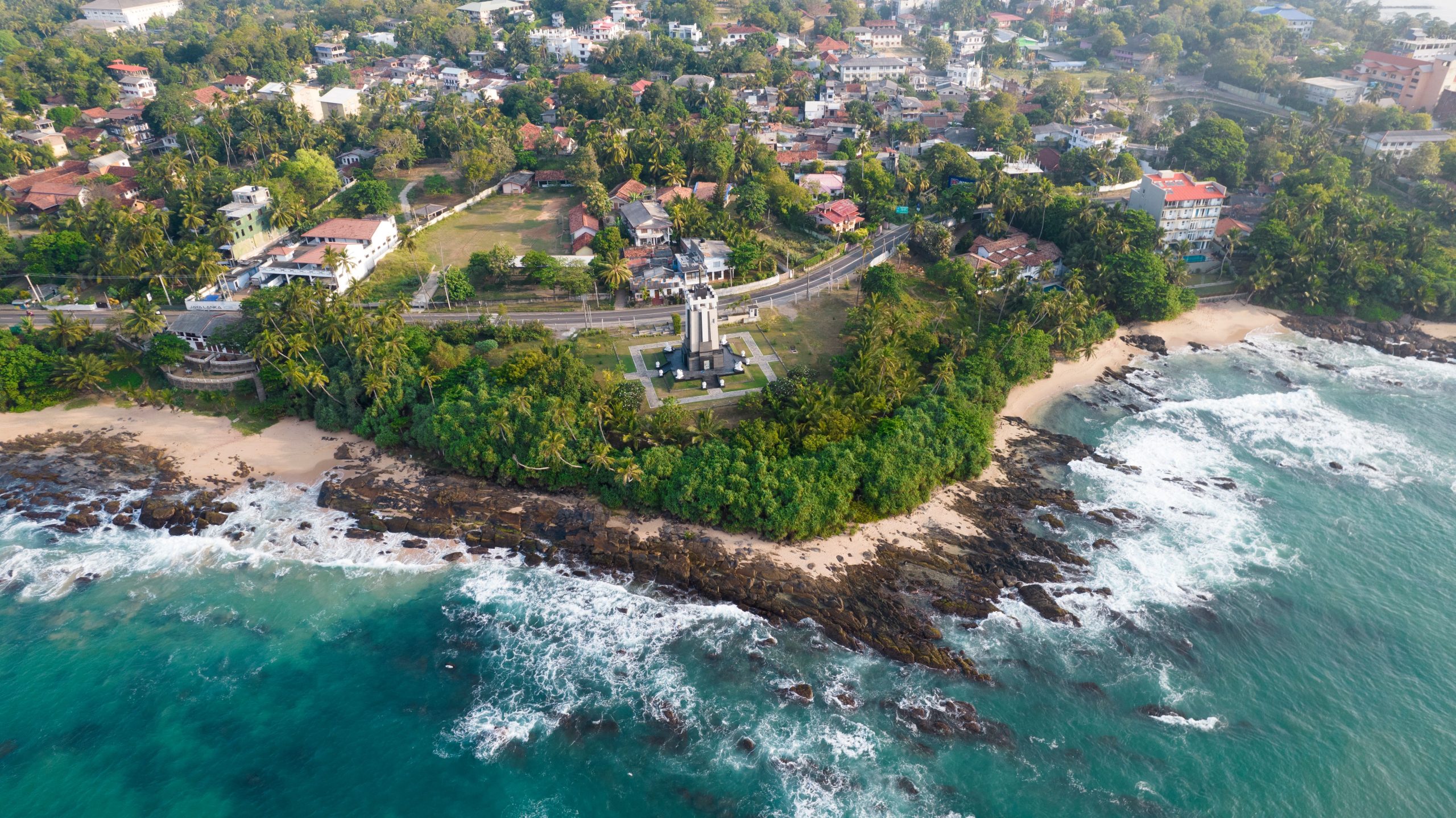
The real pleasure of this stretch is that you are never far from a reason to pull over. Roadside stalls sell king coconuts and fresh pineapple, fishermen haul in nets on the sand, and almost every town has a beach within a few minutes of the main road.
Stops: Bentota, Turtle Hatcheries and Hikkaduwa
Three stops stand out between Colombo and Galle, and together they can easily fill a full day.
Bentota
Bentota sits about 64 km south of Colombo and is the first big resort town on the route. Its wide golden beach is good for swimming, and the Bentota River behind it is a hub for water sports and boat safaris through the mangroves. If you only make one longer stop before Galle, this is a strong choice. It has enough restaurants and cafes for a proper lunch break too.
Turtle Hatcheries at Kosgoda
Just south of Bentota, the village of Kosgoda is known for its turtle hatcheries. Several conservation projects along this stretch collect eggs from the beach, protect them from poachers and predators, and release the hatchlings back into the sea. A short visit lets you see young turtles up close and learn how the projects work, which makes it a favourite with families traveling with children.
Hikkaduwa
Hikkaduwa lies about 14 km before Galle and is one of the most developed beach towns on the coast. It is best known for snorkeling and diving over its protected reef. The Hikkaduwa coral sanctuary covers 1.016 square kilometres and shelters corals of 60 species along with over 170 species of reef fish, according to Sri Lanka's official biodiversity clearing house. It was first declared a wildlife sanctuary in 1979, making it one of the country's earliest protected marine areas. Glass-bottom boats run from the beach for those who would rather stay dry, and sea turtles are often seen grazing in the shallows.
Exploring the Historic Galle Fort
Galle itself is built around its fort, a walled old town that the Portuguese first fortified and the Dutch later rebuilt into the stone ramparts you see today. It is recognised as a UNESCO World Heritage Site for its blend of European colonial architecture and South Asian tradition, and it is the single best reason to make this drive.
The fort is compact and flat, so the best way to see it is on foot. Park outside the walls and wander the grid of narrow streets lined with old merchant houses, boutique hotels, cafes and small museums. Many of the buildings have been carefully restored, and the mix of whitewashed walls, red-tiled roofs and shaded verandas gives the whole quarter a slow, lived-in feel.
Climb up onto the ramparts in the late afternoon. The wide stone walls make a natural walking path that circles much of the fort, with the ocean on one side and the old town on the other. The white Galle lighthouse at the southern point is the most photographed spot in the fort and a good place to watch the sunset. Local children often leap from the walls into the sea nearby, a long-standing fort tradition.
Give yourself at least two or three hours here, and longer if you plan to eat or shop. The fort is still home to a living community, so dress and behave as you would in any residential neighbourhood when you step off the ramparts and into the streets.
Beaches and Lunch Spots Worth Pulling Over For
Half the fun of this drive is the freedom to stop on a whim, and the southwest coast makes that easy.
For a swim or a long lunch, these stretches reward a detour:
- Bentota Beach for calm water, water sports and beachfront restaurants.
- Induruwa and Kosgoda for quieter sand and the turtle projects nearby.
- Hikkaduwa for snorkeling, surf and a lively row of beach cafes.
- Unawatuna, just beyond Galle, for a sheltered bay that is one of the most popular swimming beaches in the south.
Food is a highlight in its own right. Expect fresh seafood almost everywhere: grilled fish, prawns, crab curry and rice and curry spreads that change by the day. Roadside stalls are good for a quick king coconut or a short eat, while the cafes inside Galle Fort suit a longer, cooler lunch out of the sun.
Doing the Drive Comfortably With a Private Driver
The coastal road is scenic but busy. It runs through the middle of every town, with buses, tuk-tuks, pedestrians and the occasional stray dog all sharing the same narrow lane. Parking near the beaches and the fort can be awkward, and the stops you most want to make are rarely signposted in English.
A private driver removes all of that friction. You can tell your driver you want to see a turtle hatchery, stop for lunch when you spot the right place, and spend as long as you like in Galle Fort without watching a meter or planning a route. Local drivers also know which beaches are safe for swimming on a given day and which roadside stalls are worth the stop, which turns a simple transfer into a proper tour.
This is exactly the kind of flexible, unhurried trip that Srilankadriverhire is built for. An English-speaking driver-guide handles the navigation and the parking while you take in the coast, and you can shape the day around your own pace rather than a fixed schedule.
If you are weighing up your options for getting around the island, our comparison of train versus private driver in Sri Lanka explains when each makes sense. For the Colombo to Galle run in particular, the chance to stop freely is what makes the private-driver option so well suited to it.
Whichever way you travel, build in a little extra time. The best moments on this drive tend to be the unplanned ones: a quiet beach you had not heard of, a fisherman mending nets, or a plate of crab curry at a place with no sign out front. Book a driver for the day, pick the coastal road down and the expressway back, and let the southwest coast set the pace.
Frequently asked questions
How long does the drive from Colombo to Galle take?
About an hour on the Southern Expressway, or roughly 2.5 to 4.5 hours on the coastal A2 road depending on traffic and how many times you stop.
Should I take the expressway or the coastal road?
Take the expressway when you want speed and the coastal road when you want the scenery and stops. Many travelers do one each way.
What is the best stop between Colombo and Galle?
Bentota for the beach and river, a Kosgoda turtle hatchery for families, and Hikkaduwa for snorkeling over its coral sanctuary are the standout stops.
Is one day enough for a Colombo to Galle trip?
You can do it as a long day trip, but staying one night near Galle or Hikkaduwa lets you enjoy the beaches and the fort without rushing.