


Key takeaways
- Sigiriya is a granite peak standing some 180m high, inscribed as a UNESCO World Heritage Site in 1982 (UNESCO).
- Climb right after the 7:00 AM opening or in the late afternoon to avoid midday heat and the largest crowds.
- Pair Sigiriya with the Dambulla Cave Temple and a sunrise climb of Pidurangala Rock for one strong two-day plan.
- A private driver handles the long transfers from Colombo or the coast, so you arrive rested and early enough to beat the queues.
Climb Sigiriya at 7:00 AM opening or late afternoon, budget about three hours for the full visit, and pair it with nearby Dambulla and Pidurangala for one of Sri Lanka's best short itineraries. This Sigiriya Rock Fortress guide walks you through the history, the climb, tickets, and the easiest way to reach the site so your day runs smoothly from the first step to the summit.
The rock rises straight out of flat jungle in the heart of the island. From the top you look out over the water gardens King Kashyapa laid out more than 1,500 years ago. Getting there and up takes a little planning, and this guide covers what matters.
Sigiriya Rock Fortress Guide: History of the Lion Rock
Sigiriya is a granite peak standing some 180m high, crowned by the ruins of a royal capital built by the parricidal King Kassapa I, who reigned from 477 to 495 (UNESCO World Heritage Centre, 1982). Kashyapa seized the throne from his father, then raised a palace and fortress on and around the rock. After his defeat the site became a Buddhist monastery for centuries.
The name comes from the great lion gateway halfway up. In its original form, visitors climbed into the mouth of a brick-and-plaster lion to reach the final staircase. Today the enormous carved paws remain, which is why people call it the Lion Rock.
Two features draw the most attention on the way up. A sheltered gallery on the western face holds the famous frescoes of graceful female figures, painted in warm ochres and reds and remarkably intact after fifteen centuries. Just below them runs the Mirror Wall, once polished to a shine, now covered in centuries of visitor graffiti that count among the oldest writing in the Sinhala language.
At the summit sit the foundations of Kashyapa's palace, along with cisterns cut into the rock and terraces that once held gardens. UNESCO inscribed the Ancient City of Sigiriya as a World Heritage Site in 1982 for its royal architecture and its early urban planning.
When Is the Best Time of Day to Climb?
Start right at the 7:00 AM opening or begin your climb in the late afternoon, around 3:30 PM. The staircases are steel and stone bolted to an exposed rock face, so the midday sun turns the ascent into a hot, slow grind with little shade.
Early morning is the strongest choice for most travelers. The air is cool, the light is soft for photos of the frescoes, and the first buses of tour groups have not yet arrived. You get a clearer path up the narrow spiral stairs to the fresco gallery, which bottlenecks badly once crowds build.
Late afternoon works well if a sunrise start is not realistic. The heat eases, the crowds thin as day-trippers head out, and the low sun lights the western face beautifully. Give yourself enough margin before the last entry so you are not rushing the descent in fading light.
Whichever window you pick, bring water and pace yourself. The route climbs roughly 1,200 steps in total, and the final section is steep. Most visitors reach the top in 1.5 to 2 hours including photo stops, then take under an hour to come down.
Tickets, Opening Hours, and What to Bring
Sigiriya is open daily, with entry from around 7:00 AM and the site closing in the late afternoon, so plan to arrive early and finish well before closing. Foreign-visitor tickets are sold at the entrance and are priced separately for adults, children, and SAARC nationals, so check the current rate on arrival because prices are revised from time to time.
Buy your ticket at the main western entrance near the water gardens, not at the Pidurangala side. Keep the stub handy because staff check it at several points on the way up. The on-site museum near the entrance is worth a short stop for context before you climb.
Pack for heat and a real climb, even for a short visit. A few essentials make the day far more comfortable.
- Plenty of water, at least one liter per person
- A hat, sunglasses, and sunscreen for the exposed staircases
- Proper walking shoes with grip for the steep steps
- A light rain layer in the wetter months
- Modest clothing that covers shoulders and knees if you plan to visit temples the same day
Watch for the resident hornets on the upper section. Guides will point out the quiet zones near the nests, so keep noise down and move calmly through those stretches.
Combining Sigiriya With Dambulla and Pidurangala
Sigiriya sits in the Cultural Triangle alongside two sites that turn a single climb into a full, varied itinerary. The Dambulla Cave Temple, itself a UNESCO World Heritage Site, lies a short drive south and shelters a series of caves filled with Buddha statues and painted ceilings. Pidurangala Rock stands just north of Sigiriya and offers the classic head-on view of the Lion Rock.
A common two-part plan pairs Sigiriya and Dambulla in one day. Climb Sigiriya in the cool morning, then drive to Dambulla in the afternoon when its shaded caves are a welcome relief from the sun. The two sites complement each other, one an open-air fortress, the other a quiet hillside sanctuary.
Pidurangala rewards early risers. The scramble to the top is rougher than Sigiriya, with a rocky final stretch, but you climb it for the sunrise panorama of Sigiriya glowing across the jungle. Many travelers do Pidurangala at dawn, then move to Sigiriya once it opens.
If you have two days, the ideal rhythm is Pidurangala at sunrise and Sigiriya later on day one, then Dambulla on a relaxed day two. A private tour with a driver lets you set that pace without watching a bus timetable, and your driver knows which site to hit first to stay ahead of the crowds.
How to Reach Sigiriya Easily With a Private Driver
Sigiriya is deep in the island's interior, several hours by road from Colombo, the airport, and the southern beaches, so getting there is the part most first-time visitors underestimate. Public buses and trains reach the region but involve changes, long waits, and a final stretch by tuk-tuk, which eats into the early-morning window you want for the climb.
A private car with a driver removes that friction. You leave when you choose, ride in air conditioning over long inland stretches, and arrive early enough to beat the tour groups to the staircase. The driver waits while you climb, so your bags and water stay secure and you are not tied to a return timetable. If you want the full picture of how the arrangement works, our guide to car hire in Sri Lanka with a driver covers costs and expectations.
The driver-guide model fits the Cultural Triangle especially well. One person handles the long transfers between Sigiriya, Dambulla, and Pidurangala, points out stops along the way, and adjusts the route if the weather shifts. That continuity is hard to match when you are switching between buses and tuk-tuks.
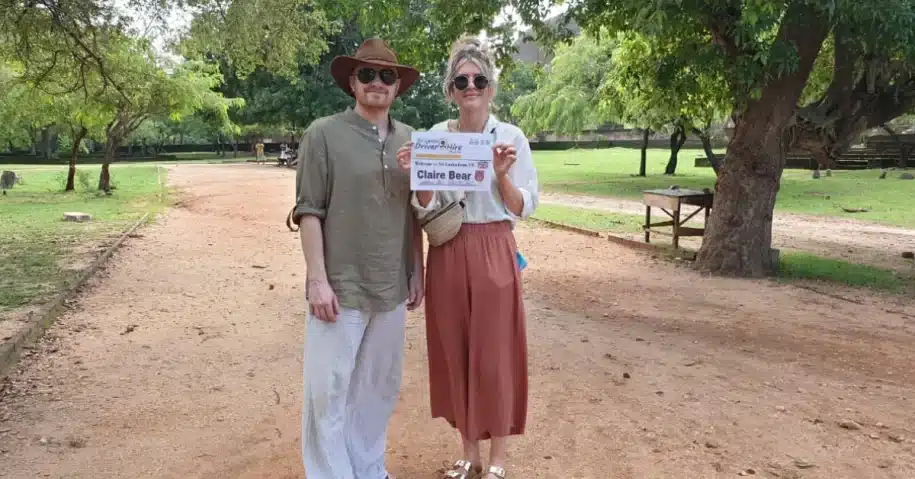
Srilankadriverhire connects travelers with English-speaking chauffeurs who cover routes like this every week. That local knowledge is the difference between a rushed, crowded climb and a calm early start with the fortress nearly to yourself. Book the transfer, arrive at opening, and give yourself the best possible morning on the Lion Rock.
Frequently asked questions
How long does it take to climb Sigiriya?
Most visitors reach the summit in 1.5 to 2 hours at a steady pace, including stops at the frescoes and the Lion's Paw terrace. Allow around three hours for the full up-and-down visit.
Is Sigiriya worth visiting?
Yes. It combines a 5th-century royal palace, surviving cliff frescoes, water gardens, and sweeping summit views. UNESCO inscribed it as a World Heritage Site in 1982 for its cultural value.
What is the best time of day to climb Sigiriya?
Arrive for the 7:00 AM opening or start in the late afternoon around 3:30 PM. Both windows avoid the fierce midday sun on the exposed staircases and the heaviest tour-group traffic.
Can I visit Sigiriya and Dambulla in one day?
Yes. The two sites sit close together, so many travelers climb Sigiriya in the morning and tour the Dambulla Cave Temple in the afternoon. A driver makes the short transfer simple.
How do I get to Sigiriya from Colombo?
Sigiriya sits in Sri Lanka's Cultural Triangle, several hours inland from Colombo. Most travelers hire a private car with a driver, which is far more comfortable than piecing together buses and trains.